This content is for Subscriber members only.
Triangular situation, Article 4-dual residency, article 2, Article 30 of Netherlands – Malta DTA
Facts:
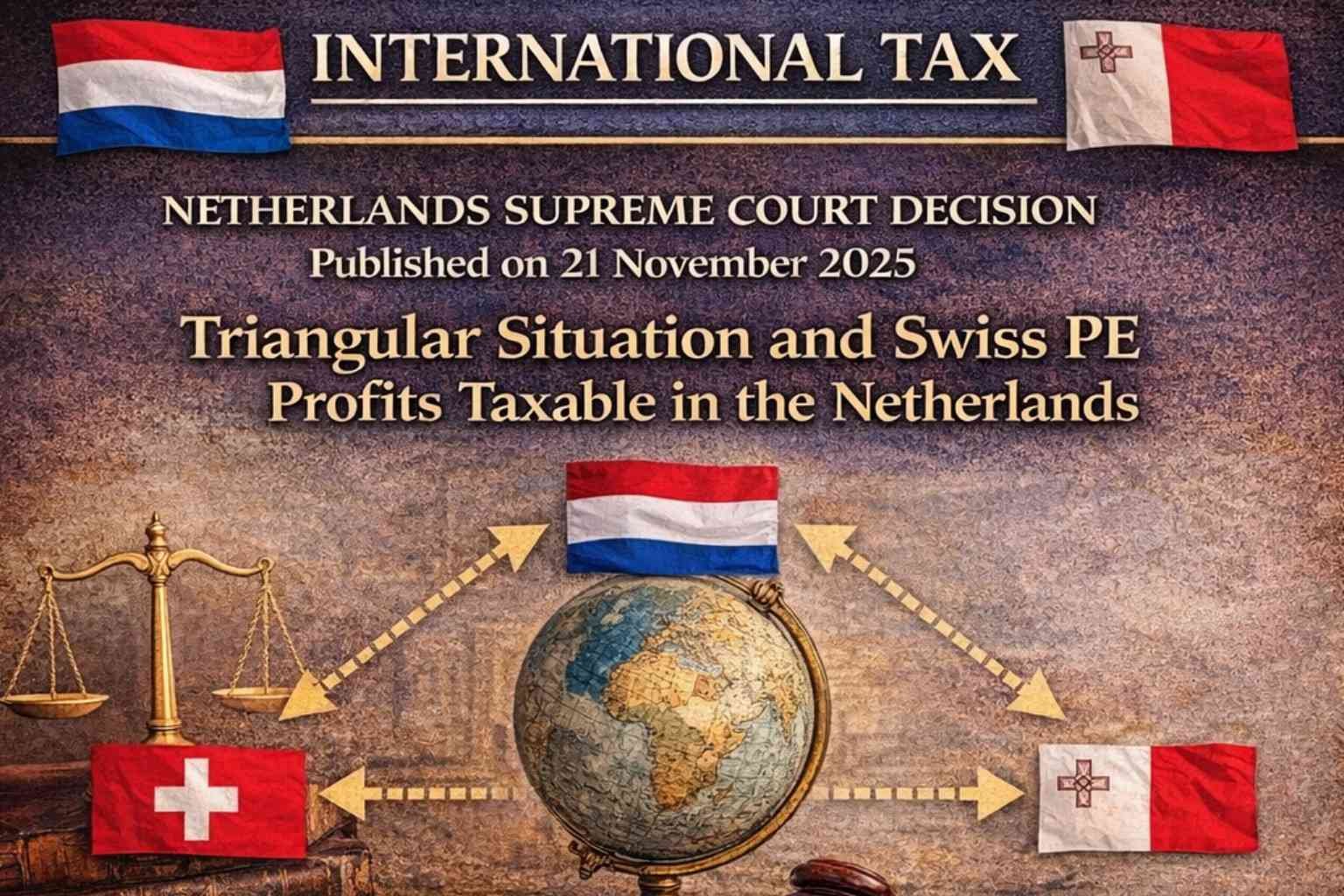
The taxpayer company is incorporated in the Netherlands and maintained a permanent establishment (PE) in Switzerland. All business profits were attributable to this PE. The company had no source of income in the Netherlands, and up until 2011, its place of effective management (POEM) was in Switzerland. Following an amendment effective 1 January 2012 to the treaty between the Netherlands and Switzerland, the company’s POEM shifted to Malta. From this date onward, Article 4 of the Netherlands-Malta Double Tax Agreement (DTA) treated the company as resident in Malta, with taxation in the Netherlands restricted to income sourced within the Netherlands. The years of dispute are 2012 to 2014.
Until 2011, the Dutch revenue authorities (Revenue) granted the company relief on business profits derived from the Swiss PE. These profits continued to be generated through operations in Switzerland from 2012 to 2014. However, from 2012, the company was tax resident in Malta and taxes business profits only if remitted there (remittance-based taxation). In the case at hand, no business income was remitted to Malta and, accordingly, such income was not taxable in Malta under domestic law. The taxpayer invoked Article 7 of the DTA between Malta and the Netherlands, arguing that the business profits should not be taxable in the Netherlands since there was no PE in the Netherlands creating triangular situation.
Revenue relied on Article 2(5) of the Netherlands-Malta DTA, which provides that if income is taxable in Malta under remittance-based taxation and the Netherlands grants relief on such income, then the Netherlands retains the right to tax that income.
The company claimed its Swiss PE business profits were not taxable in the Netherlands, arguing no Dutch PE existed under Article 7 of the DTA and that Article 2(5) only applies if relief is due to non-remittance. They also asserted Article 2(5) covers only Dutch income sources, so Swiss profits should be excluded.
Principal Issue:
Are Swiss PE business profits taxable in the Netherlands under Article 2(5) of the DTA, when all profits are allocated to Malta under Article 7 and no Dutch PE exists?
Court’s Decision:
Upholding the Court of Appeal, the court applied a purposive approach, ruling the Netherlands may tax these profits under Article 2(5). The article’s intent is to allow taxation where income isn’t remitted to Malta and thus escapes Maltese tax, regardless of Article 7 or the source being Swiss.
#InternationalTax