This content is for Subscriber members only.
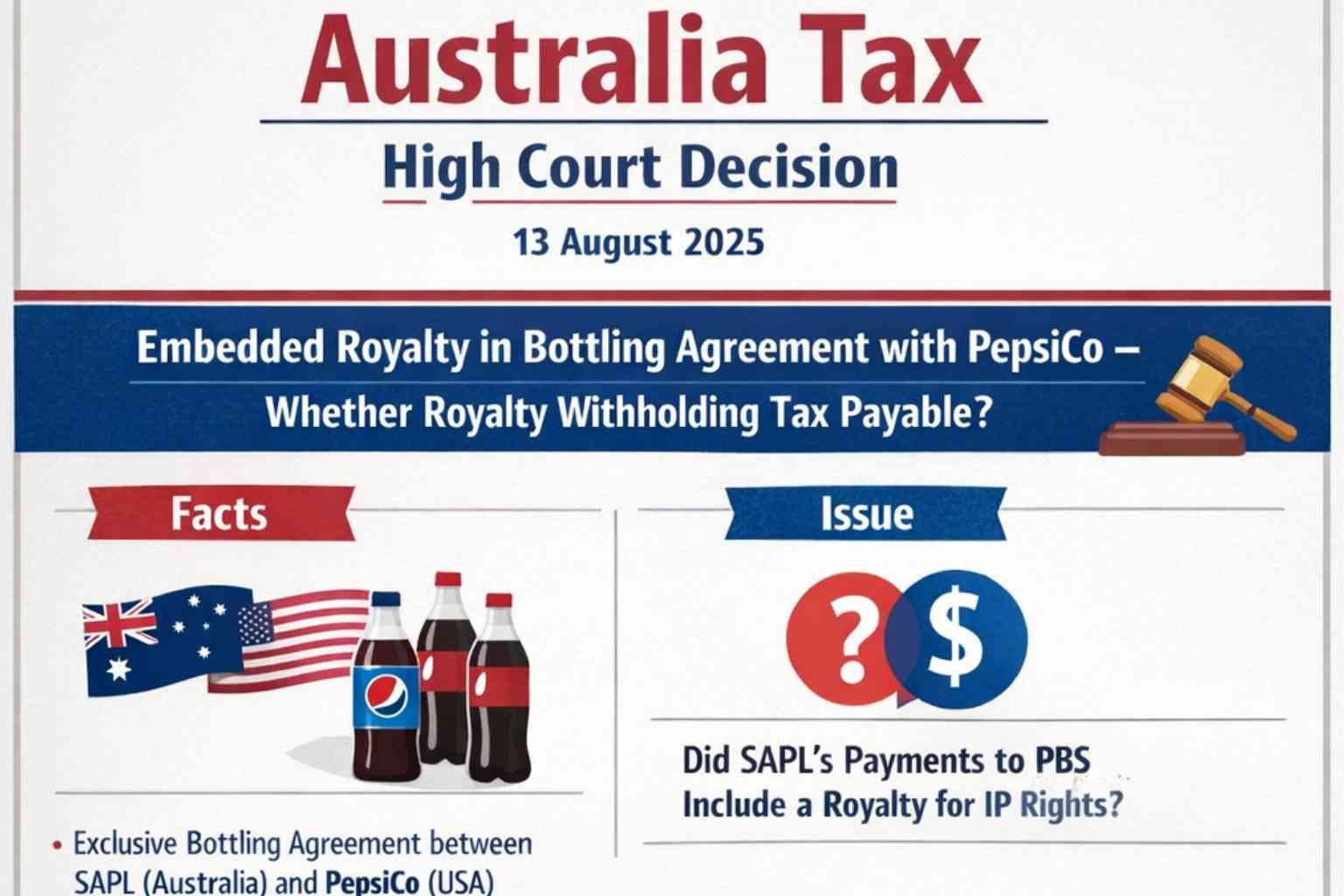
Embedded royalty in bottling agreement with PepsiCo – whether royalty withholding tax payable
Facts:
PepsiCo group companies, based in the United States, entered into an “Exclusive Bottling Agreement” (EBA) with SAPL, an Australian company. Under this agreement, PepsiCo or its affiliate would supply concentrate to SAPL, and SAPL was required to follow PepsiCo’s guidelines for manufacturing, bottling, and selling beverages in Australia. The EBA also granted SAPL an implied license to use PepsiCo’s trademark and brand name in making and selling the beverages.
An Australian affiliate of PepsiCo (PBS) was designated as the exclusive seller of the concentrate to SAPL. PBS sourced the concentrate from a Singapore-based manufacturer and sold it to SAPL, earning a margin of 0.05%, which was properly reported and taxed in Australia.
Issue:
The key issue was whether any part of SAPL’s payment to PBS constituted consideration for the licensing of PepsiCo’s intellectual property, which would trigger royalty withholding tax obligations in Australia.
Decision:
The High Court held that none of the payments made could be classified as consideration for the use of intellectual property. Consequently, no royalty withholding tax was applicable. The key points in the court’s reasoning were as follows:
- The EBA was entirely separate from the subsequent agreement between SAPL and PBS for the purchase and sale of concentrates. Payments from SAPL were made under the agreement with PBS solely for the purchase of concentrate, not under the EBA or for any intellectual property rights.
- No agency relationship was established between PBS and PepsiCo U.S. under the EBA or any related arrangement. PBS held absolute title and exclusive selling rights for the concentrate, and there was no financial obligation from SAPL to PepsiCo under the EBA.
- Tax authorities had not questioned the arm’s length nature of SAPL’s payment to PBS, nor alleged that the transaction was a sham.
- There was no evidence to suggest that PepsiCo’s intellectual property was being provided without proper compensation. The agreement between SAPL and PBS represented a comprehensive commercial arrangement. SAPL’s right to use PepsiCo’s intellectual property was part of a broader set of mutual obligations, including SAPL’s commitment to build and promote PepsiCo’s brands in Australia, which in turn increased the value of PepsiCo’s intellectual property.
- The court emphasized that the license granted to SAPL was not simply a free benefit. SAPL received the benefit of using the goodwill attached to PepsiCo’s trademarks but was also subject to significant restrictions, testing and inspection requirements, and responsibilities to enhance and protect PepsiCo’s brands. These mutual obligations formed a meaningful exchange of value.
- As a result, assigning any portion of the fair price SAPL paid for concentrate as a payment for intellectual property rights would have mischaracterized the nature of the commercial agreements involved.
#AustraliaTax