
Context is supreme! Customary International law – Common interpretation through subsequent practice!!
While numerous commentaries exist on this case, it is essential to emphasise that the India-Mauritius Double Taxation Avoidance Agreement (DTA) was unique and so its interpretation of Article 10 and Article 13. The primary reason for this distinctive interpretation lies in the consistent clarifications issued by the highest authority of Indian Revenue (CBDT) concerning these articles. The Indian Revenue Authority (IRA) was indeed aware of allegations that certain Mauritian entities functioned as conduit or shell companies. Evidence for this includes:
- Circular 789 (2000), which explicitly recognises Mauritian entities as beneficial owners under Article 10, addressing concerns raised by Indian revenue officers about the control and management of such entities being located outside India.
- The facts of the Azadi Bachao Andolan decision indicate that ‘show cause’ notices to deny treaty benefits were based on allegations of these entities being shell companies. In response, CBDT clarified that such entities are the beneficial owners under Article 10 and are eligible for treaty benefits under Article 13(4), provided they possess a valid Tax Residency Certificate (TRC) from Mauritian authorities. Regardless of the debate on TRC validity for treaty benefits, IRA and CBDT repeatedly and deliberately clarified the allowance of treaty benefits despite knowledge of the conduit nature of the entities.
- Paragraph 12.7 of the Supreme Court’s Tiger Global decision also records IRA’s position regarding conduit entities and references the resulting clarifications by the CBDT.
Negotiations between the Indian and Mauritian governments on these matters commenced as early as 1997, leading to reiterative official clarifications. Subsequently, the Supreme Court in Azadi Bachao Andolan validated Circular 789 in 2003.
These repeated clarifications and the Supreme Court’s decision in Azadi Bachao Andolan shall be considered subsequent practice by India under Articles 31 and 32 of the Vienna Convention. These articles set forth, respectively, the general rule of interpretation and the recourse to supplementary means of interpretation. These rules also apply as customary international law.
Article 31(3)(b) provides that there shall be considered, together with the context, any subsequent practice in the application of the treaty which establishes the agreement of the parties regarding its interpretation.
As per the customary international law, subsequent practice under article 31(3)(b), being objective evidence of the understanding of the parties as to the meaning of the treaty, is an authentic means of interpretation of the treaty.
A subsequent practice consists of conduct in the application of a treaty (after its conclusion), which establishes the agreement of the parties regarding the interpretation of the treaty. Subsequent practice may consist of any conduct of a party in the application of a treaty, whether in the exercise of its executive, legislative, judicial or other functions. The identification of subsequent practice requires, in particular, a determination whether the parties, by a practice, have taken a position regarding the interpretation of the treaty. The weight of a subsequent practice depends, inter alia, on its clarity, specificity and on whether and how it is repeated.
Based on the above para, India’s conduct in connection with the interpretation of article 13(4) and article 10 by way of repeated clarifications by CBDT and SC decision on Azadi Bachao Andolan, would serve as a subsequent practice by India because of the following reasons:
- The overall context—including India’s release of clarifications and the Supreme Court judgment—provides a robust basis for interpreting Articles 10 and 13 of the DTA. This establishes the interpretation of India that Article 13(4) benefits were accessible to Mauritian entities, even those functioning as conduits, primarily to promote foreign direct investment and foster economic growth in India.
- Considerable weight should be given to this subsequent practice, as clarifications were issued by India’s highest revenue authority and validated by the Supreme Court.
Thus, India’s actions (as subsequent practice) demonstrate agreement with Mauritius (common interpretation) on the interpretation of article 13(4) and article 10 under article 31(3)(b) of the Vienna Convention. The Supreme Court’s rejection in the Tiger Global case arguably breaches Customary International Law.
The International Law Commission’s report on subsequent practice under the Vienna Convention was acknowledged by the UN General Assembly, of which India is a member. Various Supreme Court decisions have recognised India’s adherence to the principles of Customary International law. The relevant General Assembly resolution can be found here:
digitallibrary.un.org/record/1659031/files/A_RES_73_202-EN.pdf
Further draft conclusions of International Law Commission with commentary are available at:
Yearbook of the International Law Commission 2018 – Volume II (Part Two)
Regarding amendments in section 90 pertaining to TRC sufficiency, these were enacted via the Finance Acts 2012 and 2013. Nevertheless, the CBDT again clarified in 2013 that such amendments would not affect Circular 789 in the context of the India-Mauritius treaty.
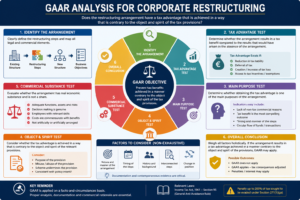
General Anti-Avoidance Rule (GAAR) provisions were first introduced through the Finance Act 2012, prior to the protocol signed with Mauritius on 10 May 2016. GAAR remained an ongoing subject of negotiation until its implementation in 2017. Notably, the substantive provisions of GAAR remained consistent with their 2012 iteration. It is highly likely that GAAR was discussed during negotiations with Mauritius leading up to the protocol, given the relevance of GAAR to foreign investments in India.
The Supreme Court did not address the documentation used during negotiations and the conclusion of the protocol, which are considered supplementary means of interpretation under Customary International law. Considering the totality of the context, events, and conduct of India, the protocol ultimately addressed conduit entities prospectively for post-2017 investments, as set forth in Articles 13(3A), 13(3B), and 27A (LOB) of the protocol.
In my considered view, since it is highly unlikely that GAAR was not part of the negotiation with Mauritius before the protocol was entered, and protocol specifically addressed conduit entities, the protocol in its entirety prevails over GAAR with respect to the India-Mauritius treaty. While GAAR typically overrides treaties, the longstanding context and actions surrounding the India-Mauritius treaty make it unique; thus, in this instance, treaty benefits should take precedence over GAAR.
Furthermore, India’s established subsequent practice provides a strong interpretive context for Article 13, wherein treaty benefits were consistently granted. Any departure by the Supreme Court from this longstanding practice constitutes a breach of both the protocol and international customary law.
Consequently, arguments suggesting that indirect transfers fall outside the treaty or that the LOB provision does not cover Article 13(4), thus making GAAR applicable, are relatively minor compared to the broader context shaped by decades of clarifications, judicial decisions, and government actions culminating in the protocol.